
A Deep Dive into Bear Safety
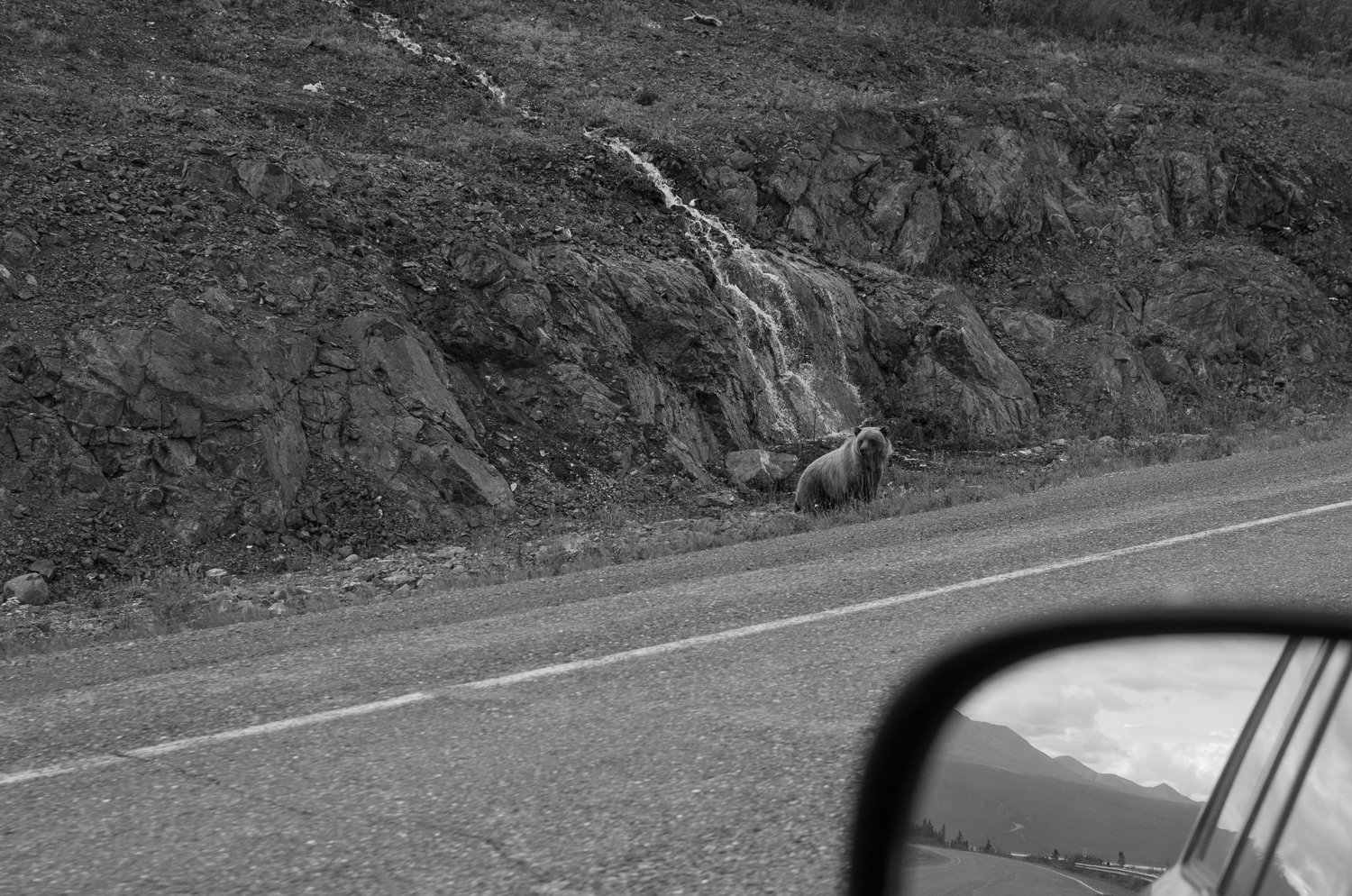
The family of Ursidae. Whether it be Ursus americanus (American Black Bear), Ursus arctos horribilis (Grizzly Bear), or even Ursus maritimus (Polar Bear), few animals have captured so much of the imagination, and oftentimes the fear of folks who travel through the backcountry. There’s so much to be said about these incredible animals, but today we’ll focus on human/bear conflicts — why they might happen and what you can do to mitigate some of the risk.
While I would never purport to be a bear expert, I have spent many years recreating in bear habitat and have had my fair share of close encounters with both black bears and grizzlies. As a guide, fear of bears is one of the most frequent concerns I hear from guests, and I work hard to educate and reassure folks while out on a trip. Bears are extremely powerful animals, and it’s vital to treat them with the respect and caution they deserve. That being said, I believe that by following a few rules when out on the Land, we can significantly reduce our chances of a negative encounter with a bear and reduce some of the anxiety we might have.
This is a deep dive into some of the rules I follow when out in the backcountry. Buckle up — we’re going full nerd here.
Sources:
Some of the sources and stats referenced here come from “Human–Bear Conflict in Alaska: 1880–2015”, by Tom Smith and Stephen Herrero, and “Efficacy of Bear Deterrent Spray in Alaska”, by Tom Smith, Stephen Herrero, Terry D. Debruyn, and James M. Wilder.
Rule 1) Bears Hate Surprises
When looking at the reasons behind human/bear conflicts, the leading cause by far was a surprised bear. Bears will do everything they can to avoid humans, but if you sneak up on one, there’s a chance it’s going to be upset, and that you end up with some scratches.
The first thing we can do to mitigate surprises is to use the bear’s powerful sense of smell. Bears have one of the best senses of smell in the animal kingdom, and if they can catch your scent early, they’ll probably take off in the other direction. Pay attention to where the wind’s blowing, especially in open areas. If you’re walking into the wind and going up and over a blind pass, be extra cautious and on alert.
The second thing we can do is help the bear hear us. When hiking in dense bushes or on tight forest trails, make lots of noise! Yelling a “HEYY BEAR” every few minutes or before rounding a corner can help the bear know you’re in the neighbourhood.
Note: There is a difference between making loud noises with your voice and relying on silly “bear bells”. Bear bells don’t work. Period. Throw those things out.
It’s also good to know that one of the biggest contributing factors in bear attacks was limited visibility (think dense bushes or thick rainforest). The poorer the sightlines, the more you should be making noise and paying attention to the wind.
Rule 2) Don’t Hike Alone
Research has found that hiking in a group of two reduced your chances of bear/human conflict by 50 percent, and that hiking with three or more brought those odds down by over 90 percent. In negative human/bear encounters, the “Human-Bear Conflict in Alaska” study found no instances of people getting injured when a group of two or more stayed together and stood their ground.
I’m not saying you should never hike alone because solo hiking can be an amazing experience. Just be aware that hiking without a partner removes the biggest safety margin you have against bear/human conflict.
Rule 3) Don’t Facilitate Curious Bears
Curiosity was the second leading reason for bear/human conflicts. Bears are curious, and if tasty smells are wafting through the air, they might be keen to take a look. This one is easy to mitigate: keep your campsite clean! Cook at least 50m away from your tents and store food, trash, and anything scented in bear-proof containers far away from both your tents and cooking area.
A group latrine can also be a big source of smell, so take care to dig one 50-100m away from your camping area, and follow all Leave-No-Trace guidelines.
Rule 4) Don’t Get In A Bear’s Personal Space
No one likes having a stranger get all up in their personal space, and bears are the same. Getting within 50m of a bear is like getting 50cm away from a stranger. Too close. There are some important caveats here. A sow with cubs is going to be extremely defensive. Don’t go within 300m if possible. The same goes for any bear guarding a kill or carcass. They will be extremely defensive, and getting within a few hundred meters can be dangerous.
Rule 4) Watch for bear signs.
Keep your head on a swivel and look for bear signs including poop, digs, and prints. Try to gauge how fresh the signs are: the fresher, the more you should be on alert. When setting up camp, look for game trails and natural constrictions that might funnel wildlife your way. If it looks like a bear highway, it might be best to camp elsewhere.
Grizzly pro-tip: When foraging, grizzlies tend to flip big chunks of ground upside down. If you look at the vegetation on the top side of these pieces, you can gauge how fresh the dig is — the greener the plants, the fresher the dig.
Rule 5) Not all bears are equal
I think it’s worth talking about the difference between wild and habituated bears. Bears that rarely see or interact with humans (aka wild bears) are often extremely wary of any kind of humanoid figure. These bears are often pretty easy to manage because they want nothing to do with people.
Habituated bears are a totally different situation. These bears have learned that humans are not a threat and frequently interact with people. This is most often the case in popular parks that receive a high volume of visitors. The more popular and visited a campground/park is, the more I’ll be cautious.
It’s also a good idea to familiarize yourself with predatory vs defensive behaviour. A defensive bear is trying to get you to leave them alone. A predatory bear is trying to eat you. This article does a great job explaining how you can tell the difference.
Rule 6) Know your deterrents
Bear spray: Effective and easy to use. If you’re going into grizzly country, most people in the group should carry a can. You should be able to draw and remove the safety within three seconds (go practice this!!!).
NOTE: Bear spray is a one-time use device. If you deploy it, even for a split second, the residue can gum up the nozzle. The can will also lose pressure, making it less effective.
Noise Deterrents: Loud, noise-based deterrents like bear bangers and air horns have mixed results as deterrents. These devices typically only work once with a bear. If you discharge a bear banger around a bear that’s never heard one before, it will probably run away. But if the bear comes back, it will now have learned that the noise doesn’t lead to any consequence (bad news). Do not rely on noise-based deterrents as your sole defence.
Firearms: Contrary to popular belief, firearms are the only truly 100% effective bear deterrent. A dead bear can’t bite you. That being said, they are extremely difficult to use effectively, dangerous, have little margin of error, and lead to a dead bear (which is what we’re trying to avoid in the first place). While I don’t recommend firearms, I do think it’s important that we don’t delude ourselves into thinking bear spray will always save us.
What To Do If You See A Bear
Now that we have Olivier’s rules for bears, it’s time to talk about what to do if you actually encounter a bear. For this, we’ll turn to my trusty drunk guy in a bar comparison.
Pretend a bear is a giant, scary-looking, 300-pound drooling biker-guy sitting at the bar of your favourite tavern. Clearly, we don’t want to mess with him.
If the biker dude doesn’t pay any attention to you, give him a wide berth. Don’t make too much noise and try to get away without catching his attention.
If the biker dude starts eyeing you up, this is when you want to get together with your friends and slowly walk out of the bar without turning your back or running. Reassure the drunk man in a calm, monotone voice that you’re leaving and don’t want any trouble.
Finally, if the big hulking biker dude gets up and starts walking towards you, this is when you want to stay close to your friends, stand your ground, and start shouting, “Hey, stand back! BACK OFF!”. This is also the point when you want to take out your bear spray and be ready to use it.
Further Reading:
Staying Safe in Bear Country: The greatest bear safety film ever made. Real actors facing off with real bears to elicit real encounters. This movie will never be remade with current work-safe rules.
Does Bear Spray Work?: A very interesting article about the efficacy of bear spray. A must-read if you use bear spray. TL;DR: Bear spray is not even close to being as effective as we like to pretend it is.
Stay Safe in Bear Country: Bear safe information for recreationalist and industry from the Yukon Government.