A Path Carved by Caribou
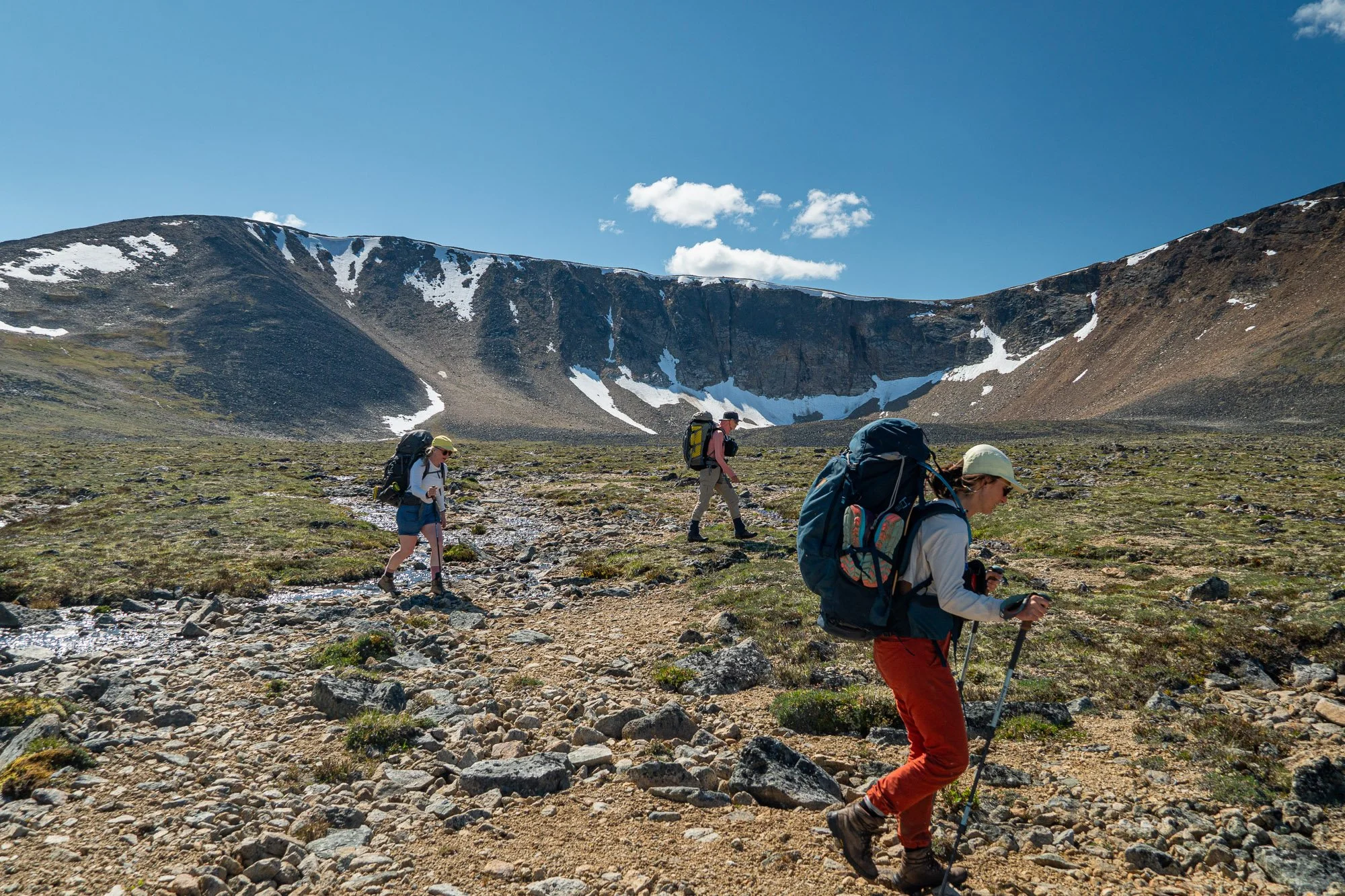
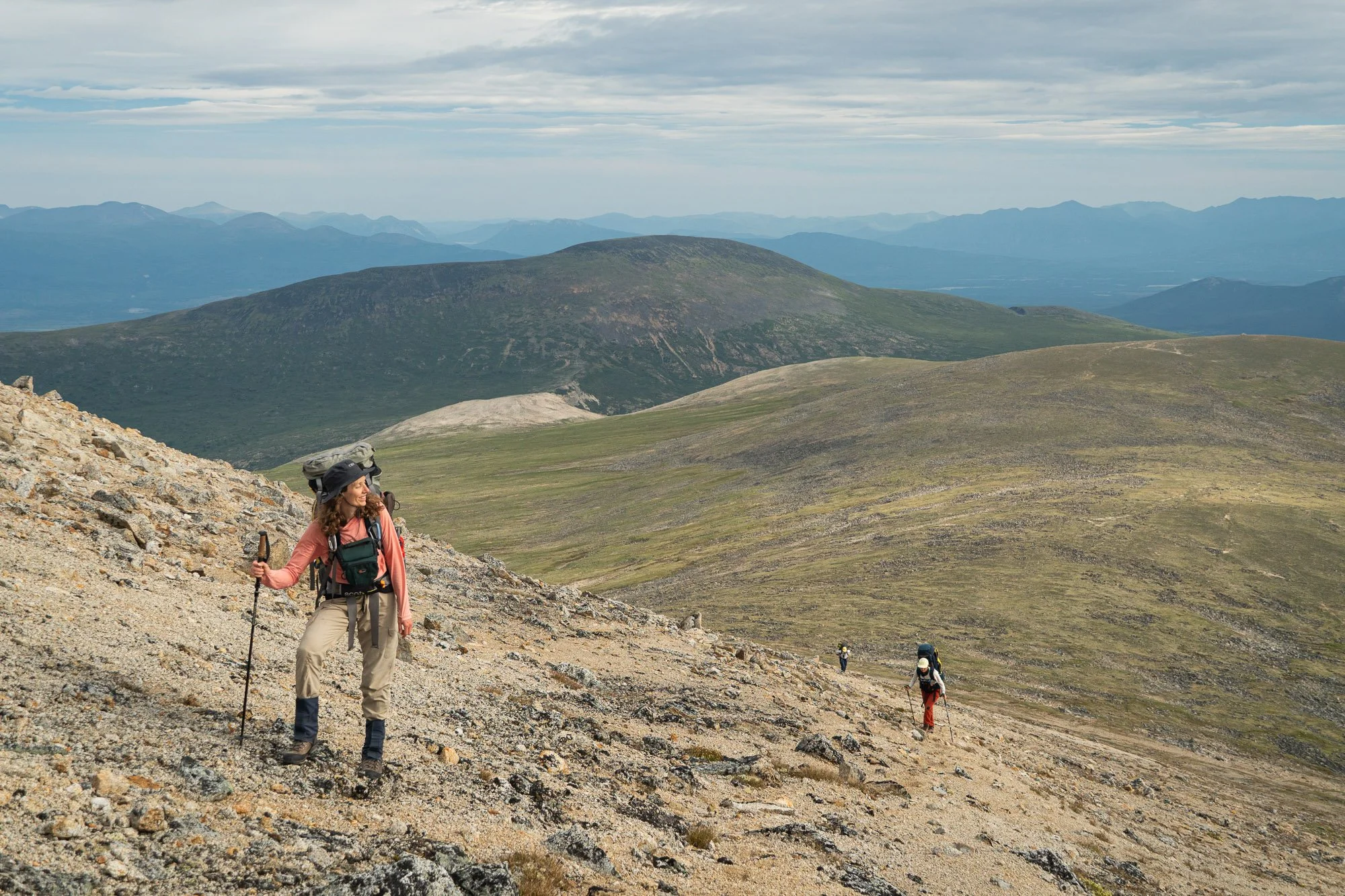
After gaining the steep hillside behind camp two, we reached the base of the ridge. Rising up from the valley below, the ridge narrowed into a perfect skyway, connecting our side of the mountain with the alpine plateau behind it. We were trying to reach a lake a few kilometres away (as the crow flies), and the landscape was providing us with an easy shortcut. It was exciting to see how our route, which only hours ago was just a hopeful plan on paper, materialized into an elegant passage through the mountains.
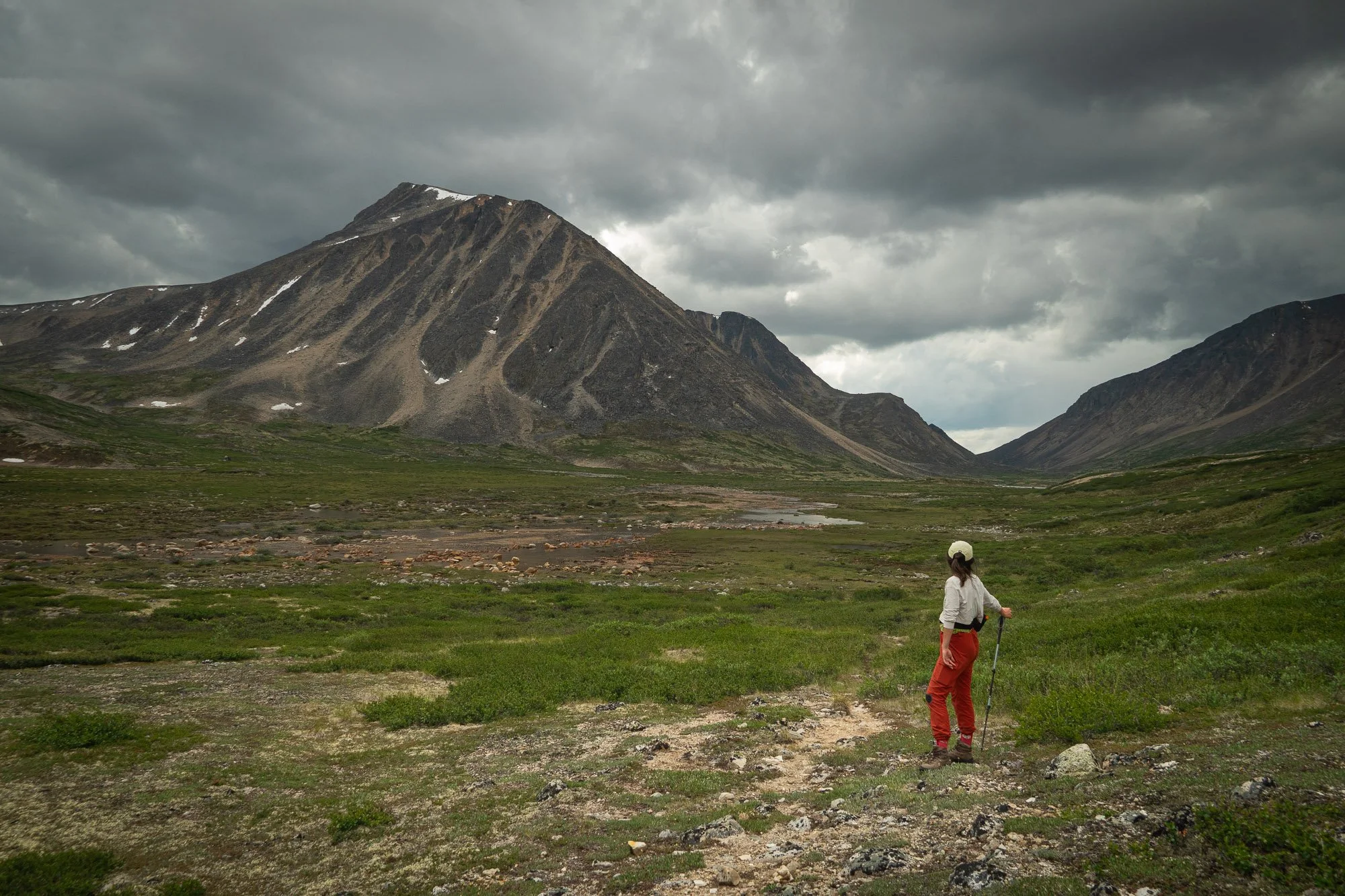
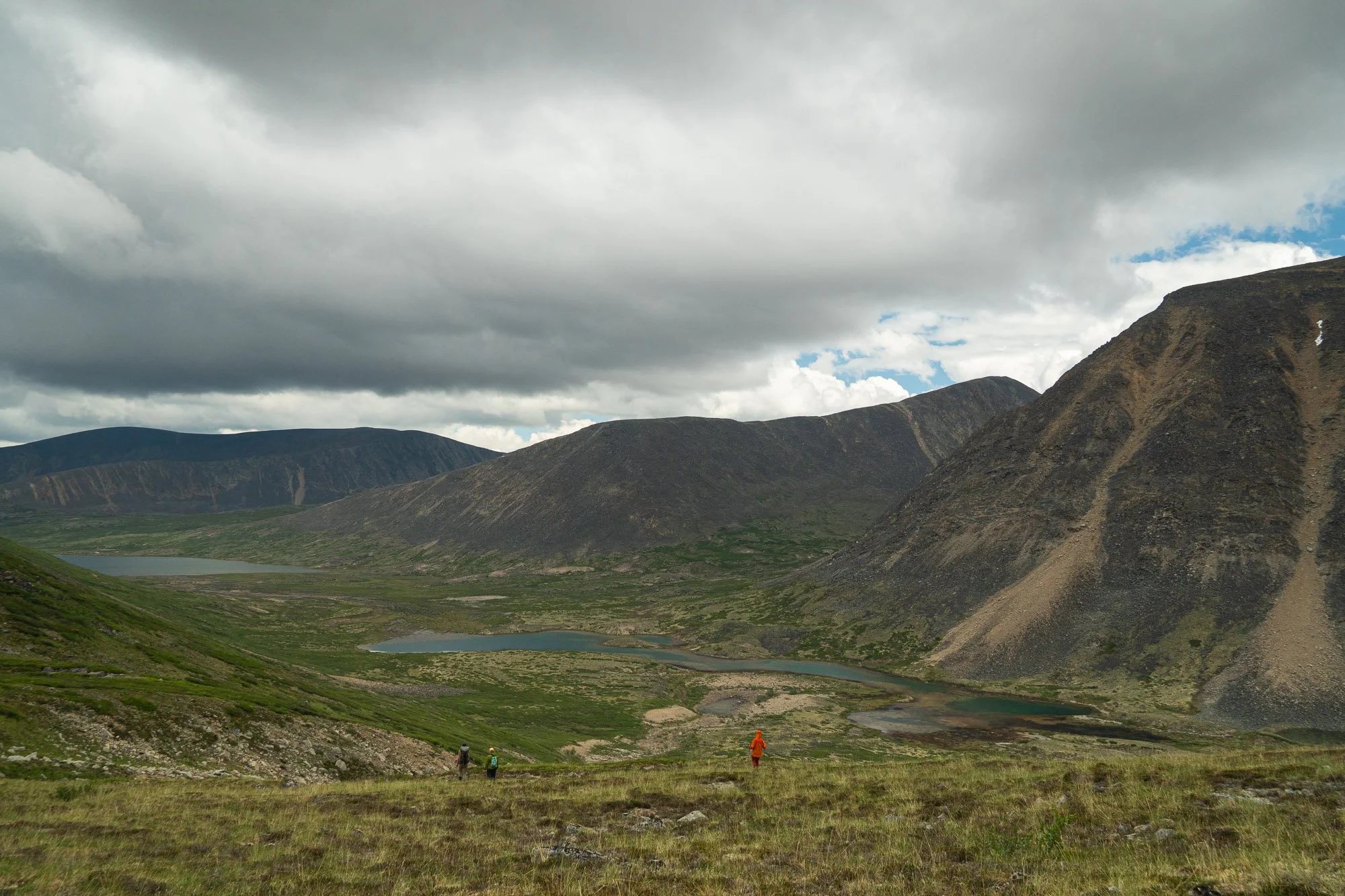
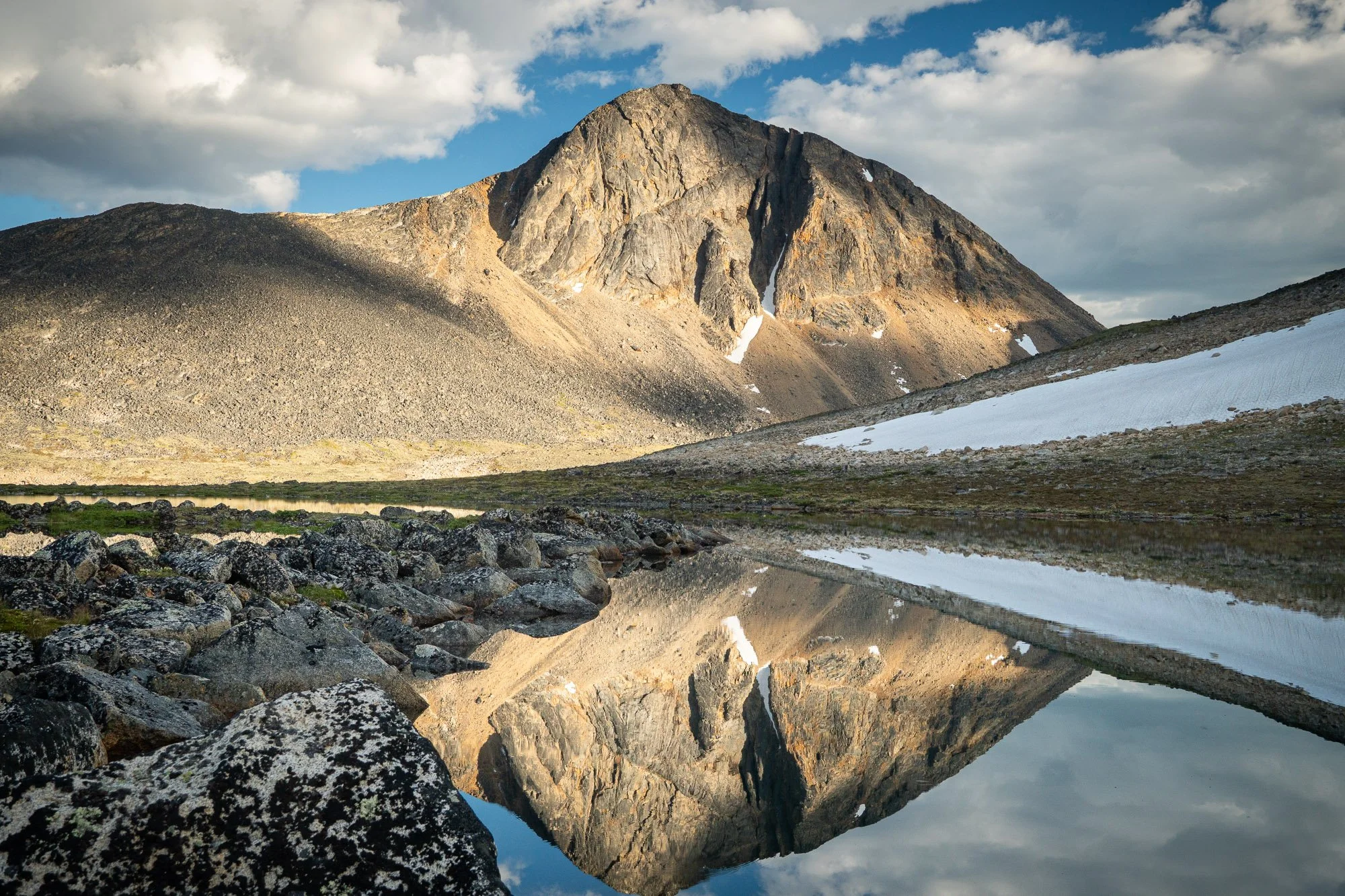
We were on our third day of an exploratory trip developing a new route for YAA in the Boundary Ranges, a 20-minute floatplane flight west of Whitehorse. To our south, jagged mountains extended past the horizon to the Pacific. To the north, the rocky alpine softened into the rounded, tundra-esque hills of the Kluane Plateau. After landing on a still lake nestled high above the treeline, our plan was to hike west, travelling from one ridge to another until we reached the Takhini River (Nakhų̄ Chù). At the shores of the river, we’d pick up our canoe that we had stashed a few days prior to our departure and paddle back to our car before heading home.
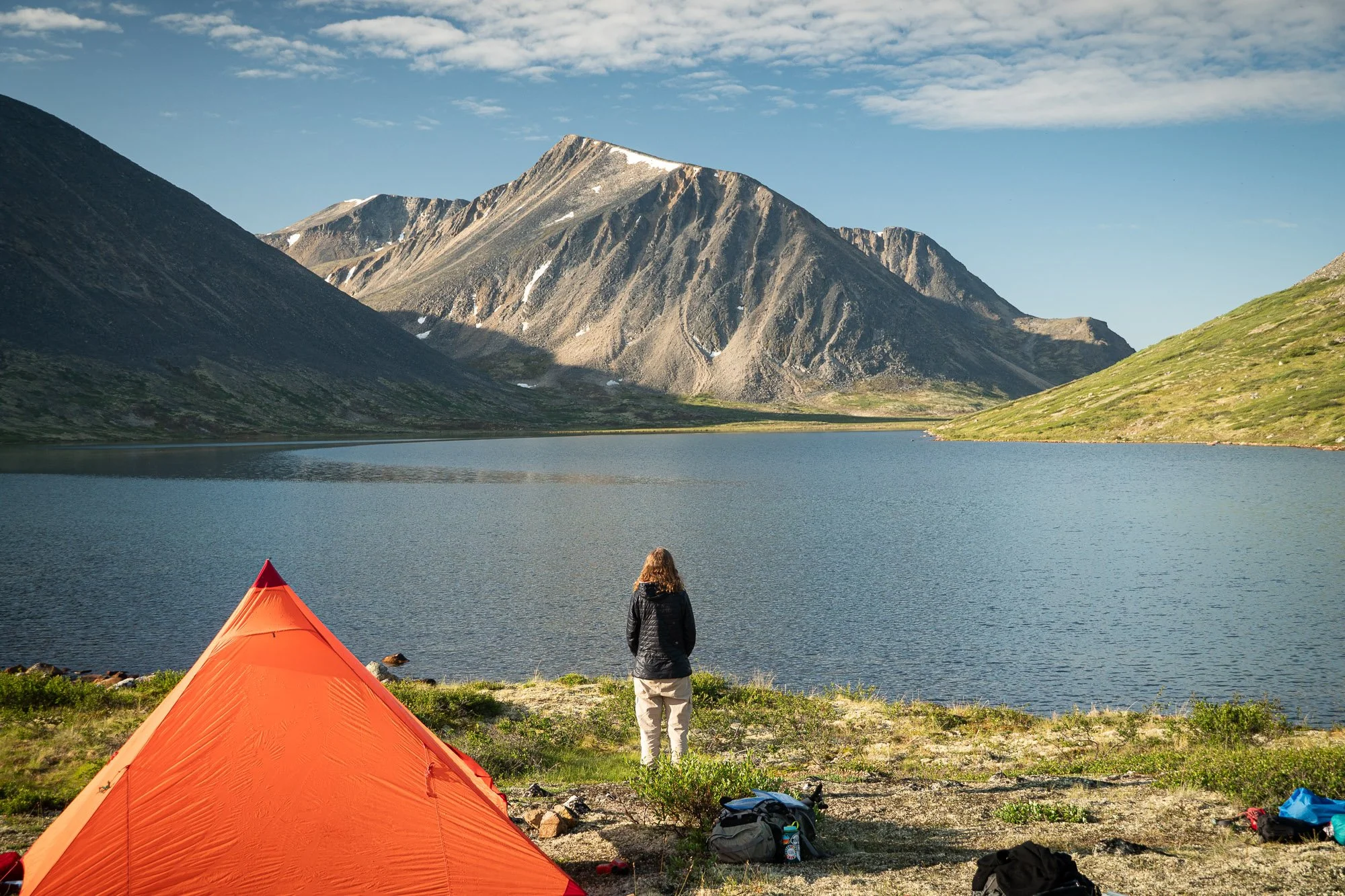
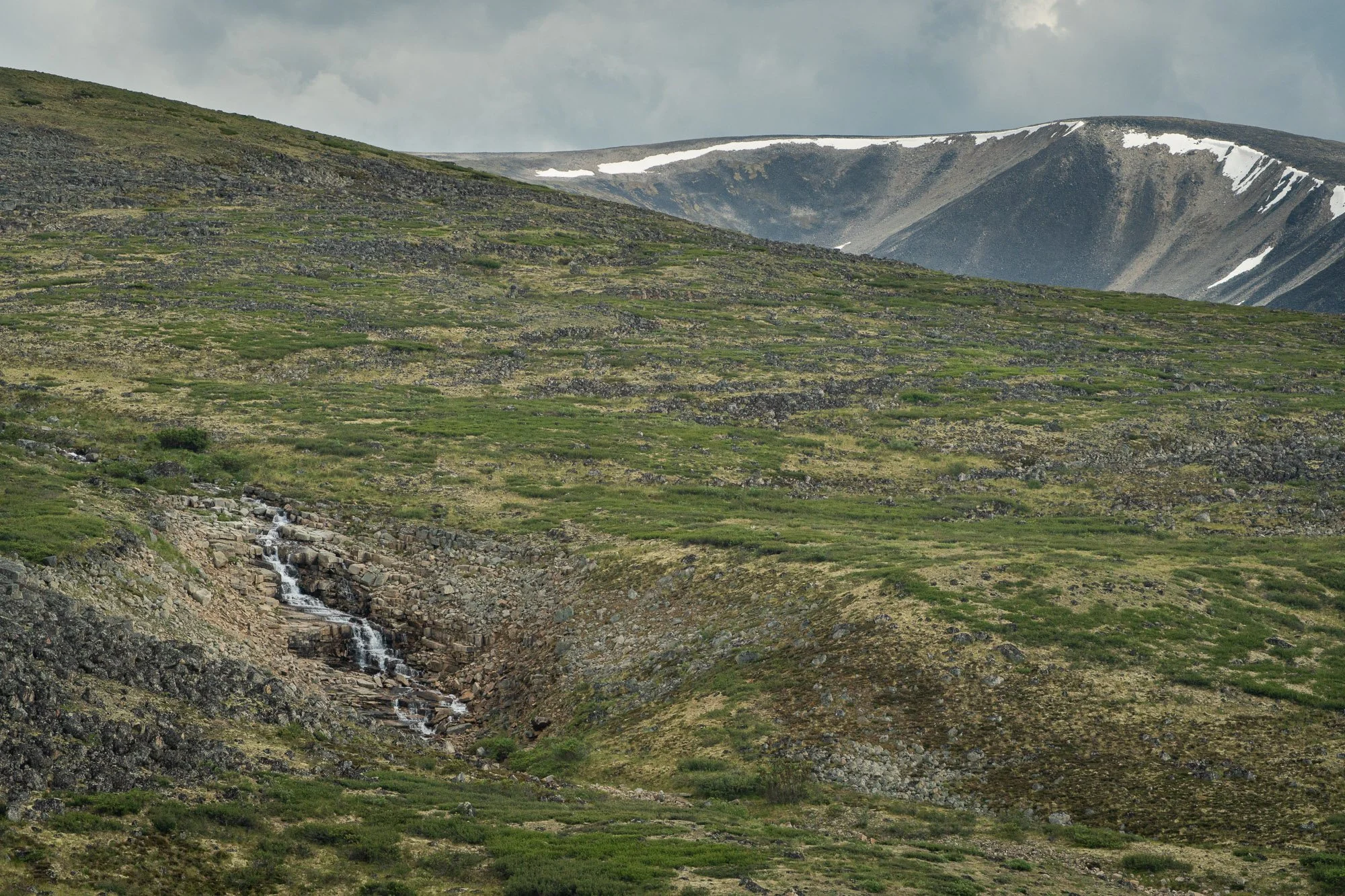
It was easy to feel small in the landscape that surrounded us. Unending panoramas stretched out as far as the eye could see, beneath giant skies that brewed towering, brooding cumulus clouds. The hillsides were littered with signs of wildlife but despite the myriad of fresh scat, game trails and prints, the animals eluded us, hidden within the vast openness.
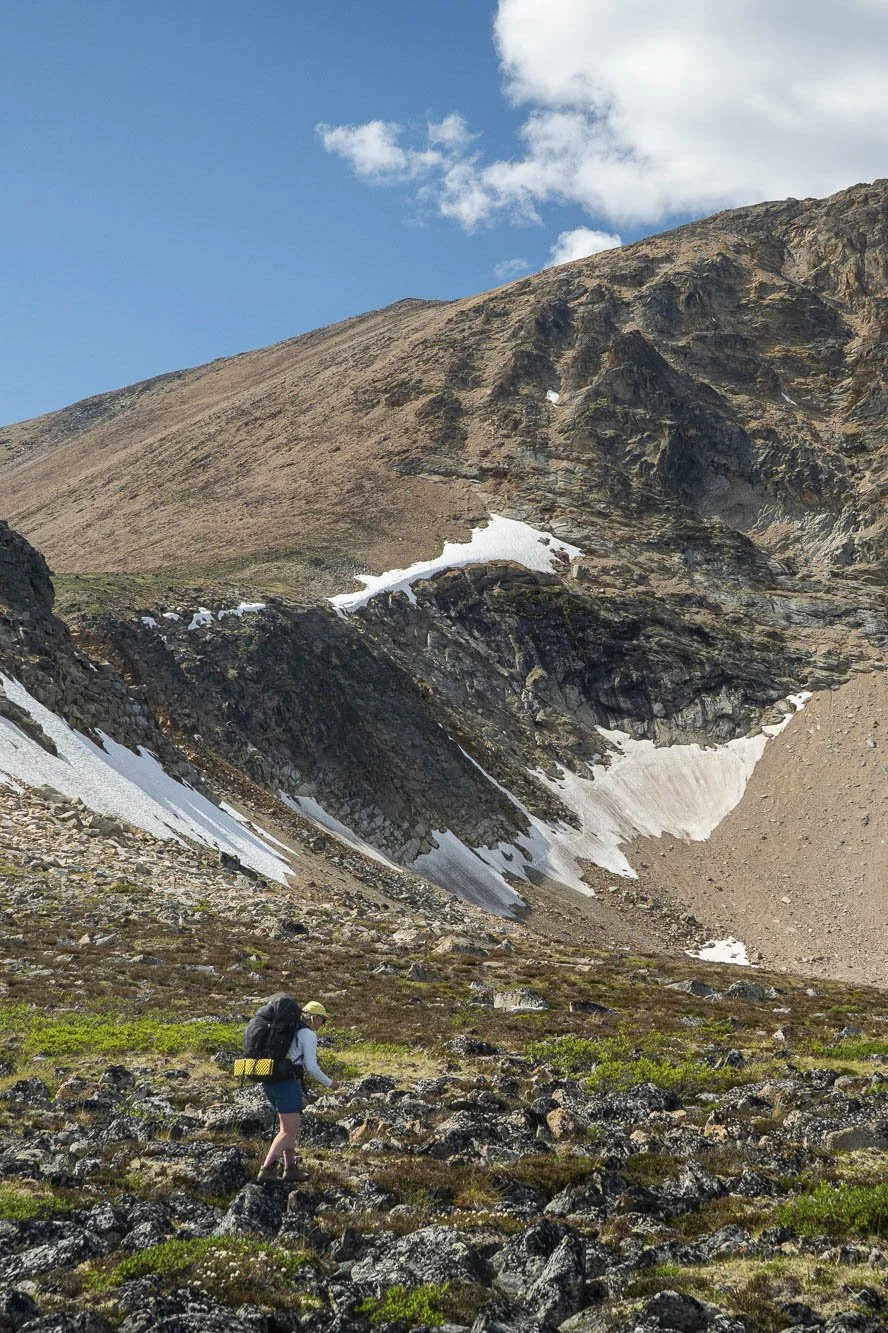
As we followed the ridgeline up, the ground dropped off on either side, naturally directing us towards the narrow mountain summit. Weaving through the ragged rocks and boulders, we followed a game trail that had been carved into the rock by thousands of years of animal traffic. It didn’t take long to realize that our route was not just a hiking line through the mountain, but a vital transit artery for all the animals miles around.
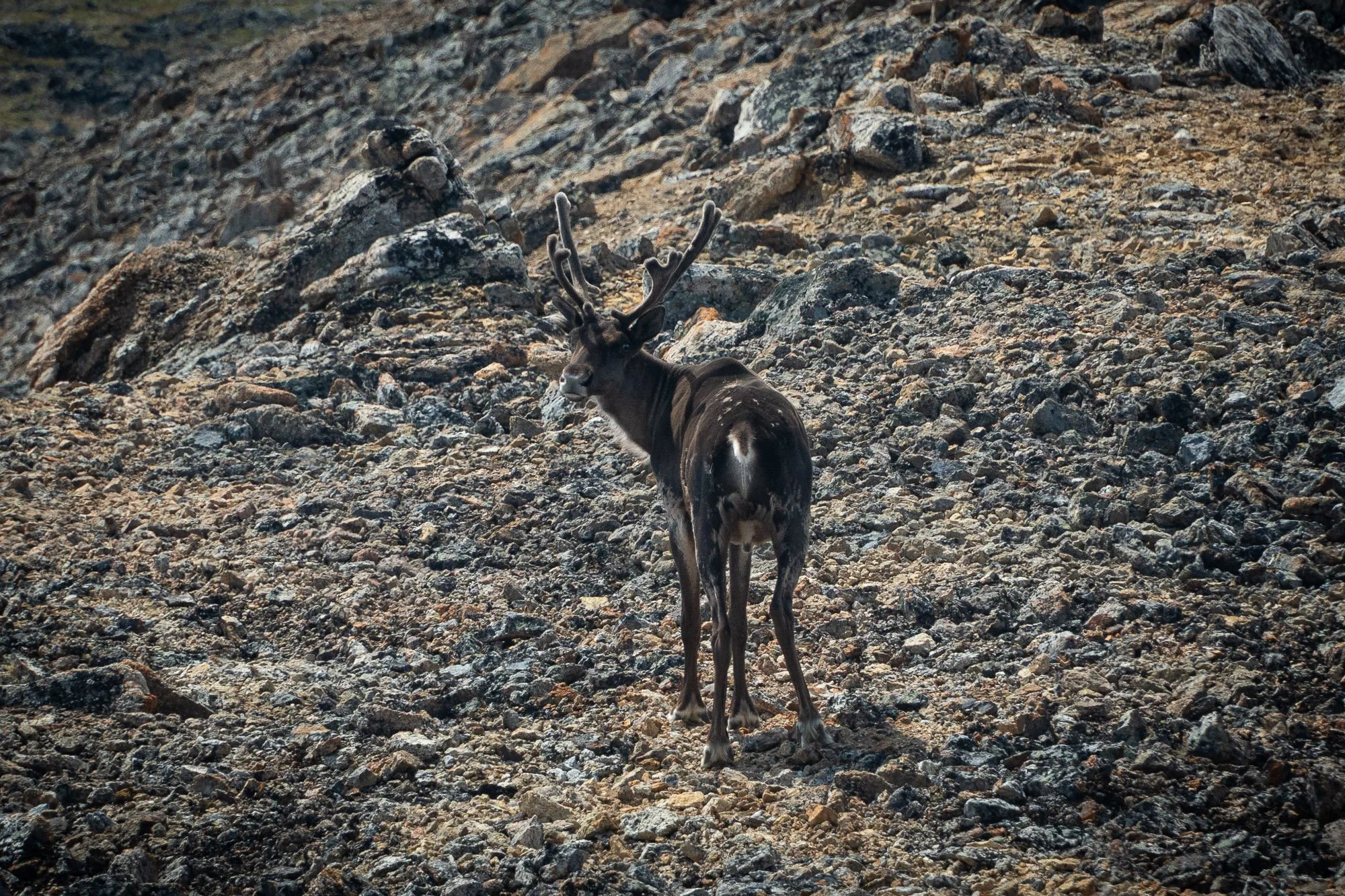
“Hey look! A caribou!” Jess exclaimed while pointing to a moving shape 500 metres behind us.
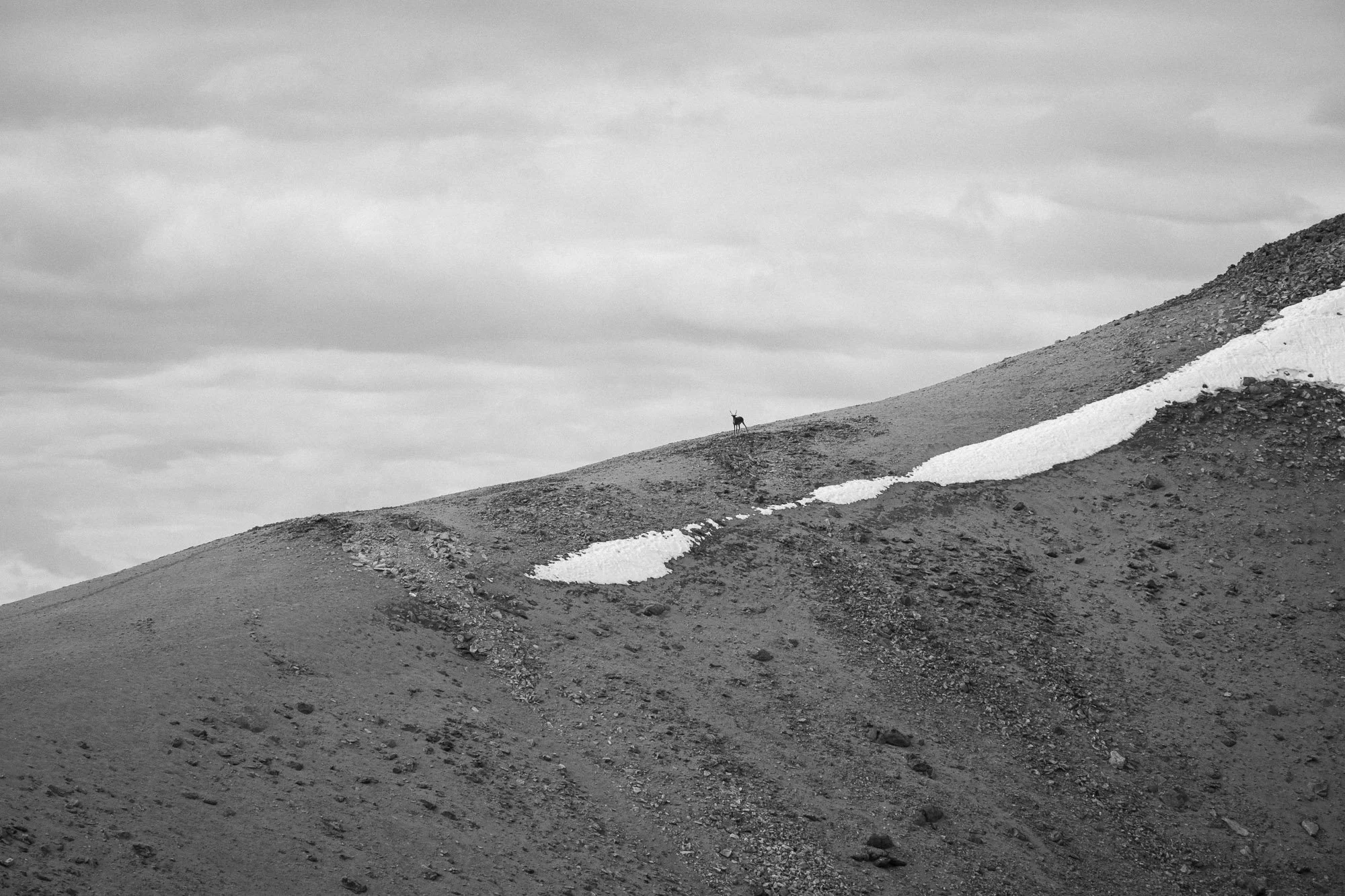
I looked back and watched a lone buck below us climbing the steep slope towards our ridge. We dropped our packs, sat down and used this as an excuse to take a break and see what this creature would do. After reaching the ridge, the caribou turned and slowly started meandering in our direction. With bated breath, we continued watching as the caribou closed the distance between us until suddenly, he lifted his head and stopped dead in his tracks. The beautiful buck had seen us, and we were now in a weird, inter-species standoff between a colourful Gore-Tex-wearing ragtag crew of hikers and a lone male caribou.
After what seemed like an eternity, I broke the silence.
“Should we keep hiking and see if he follows us? Seems like this guy wants to follow the same route we want to.”
As quietly and as gently as possible, we continued forward. After a few minutes, the buck, presumably convinced that we weren’t a danger, started following us on the rocky path towards the summit. Once at the top, we hid behind some boulders and spied the caribou as he cautiously made his way across the mountaintop and down the other side.
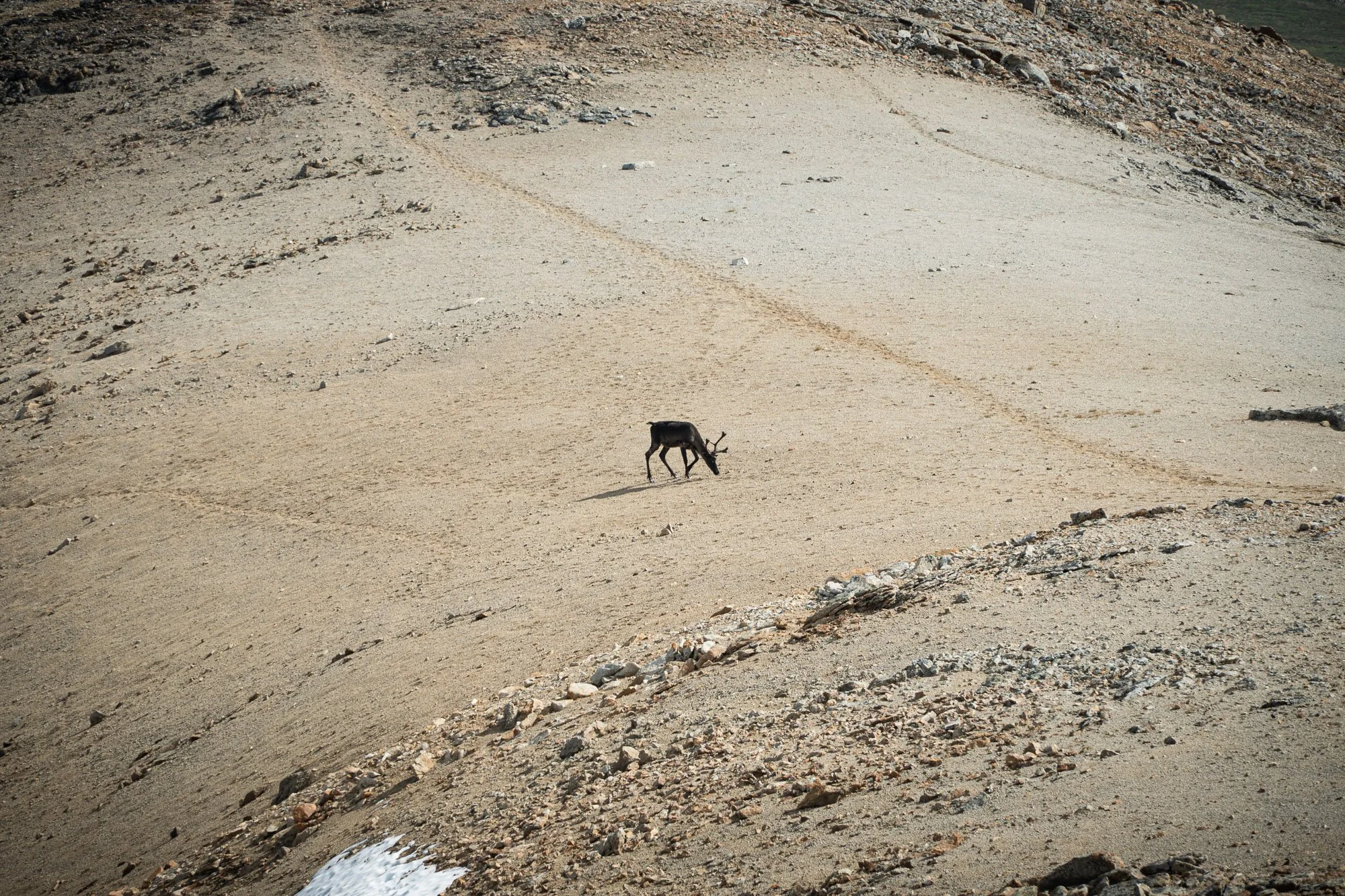
It was thrilling experience for everyone in the group. In that moment, it was impossible not to feel immensely connected to the Land around us. We had walked a path through the mountains that had been carved into rock by thousands of years of animal travel, and shared it with a caribou trying to do the same thing as us: get to the other side.
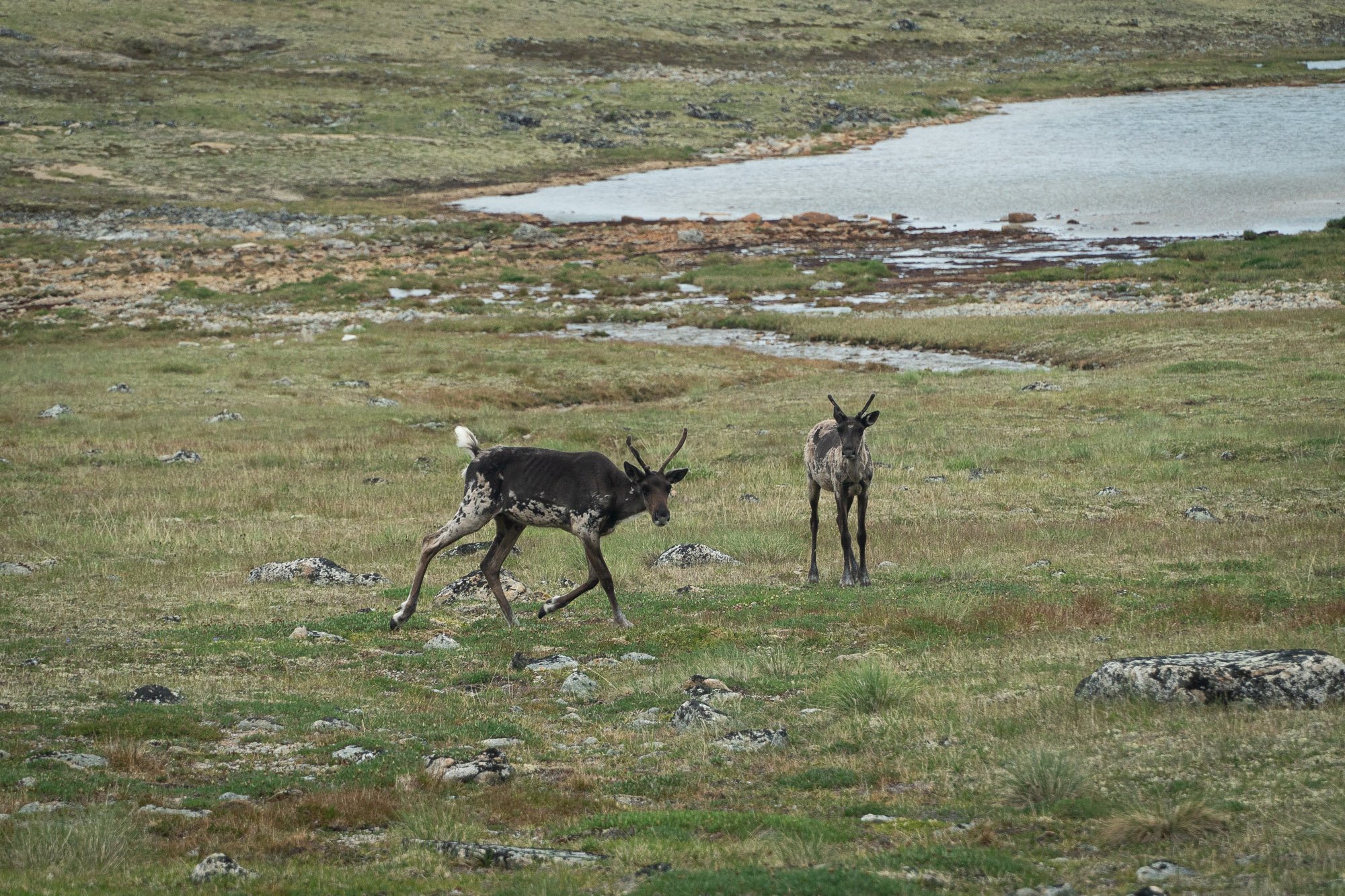
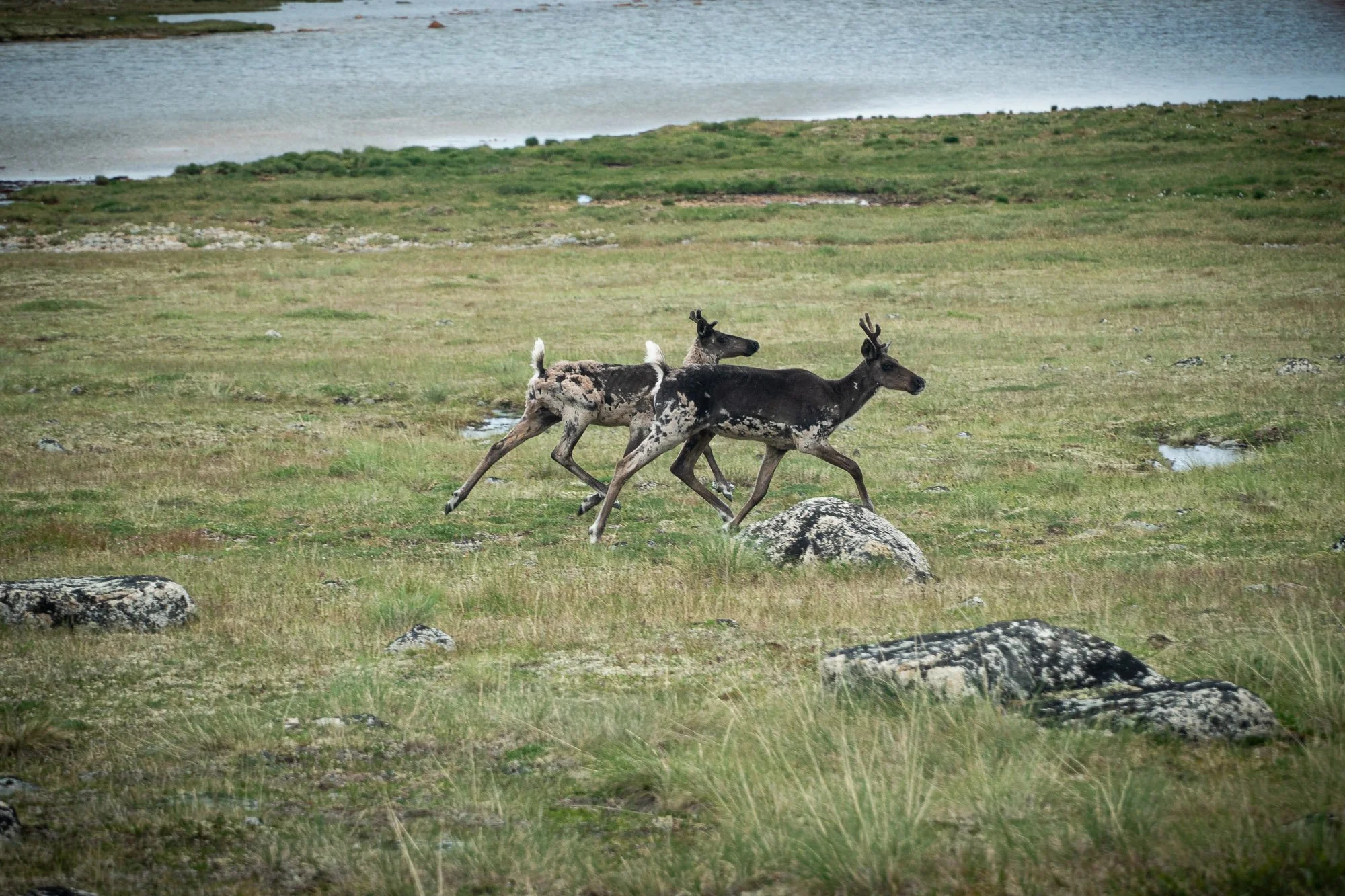
Descending down into the valley below, the hills suddenly seemed alive with wildlife. Small groups of four to six caribou dotted the slopes around us, and higher up, a group of sheep hunkered down to shelter from the wind. Reaching camp in an incredibly picturesque meadow, we were met by two curious juvenile caribou that ran right up to us. Playing what seemed to be a game, the two caribou would walk to within 10 metres of us before sprinting off. Once far enough, they would turn around, walk back to our group and sprint off again.
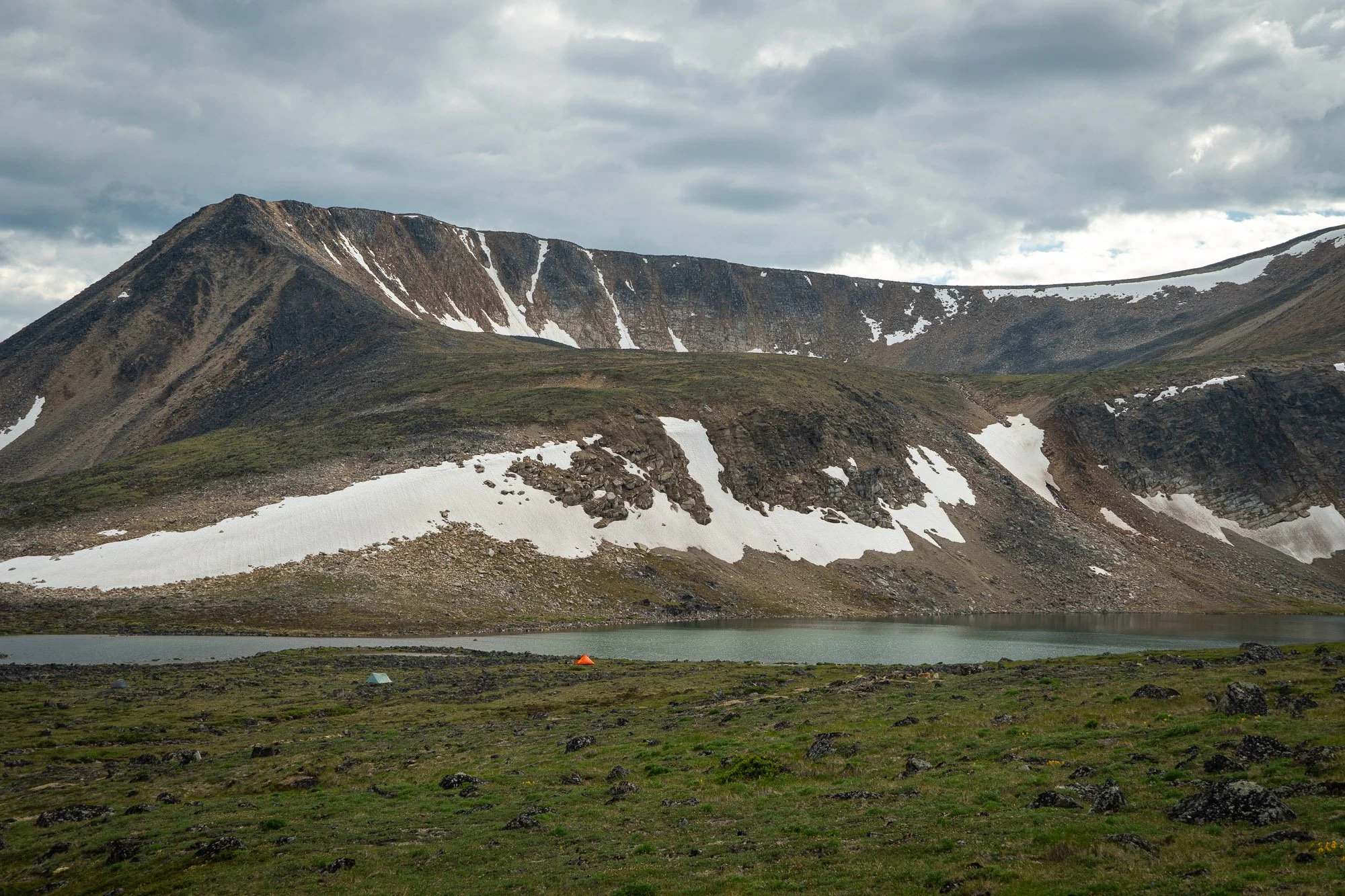
My experience in the Boundary Ranges was truly magical. To experience such an abundance of wildlife up close and walk the trails hewed in by the caribou brought a deep sense of connection and wonder to our trip. As we descended down to the Takhini River and to our waiting canoe, we reflected on how lucky and privileged we were to travel this Land. The Land and the life it harbours are both improbably resilient and delicate, and we must cherish these rare, powerful moments while doing our best to respect and protect these places.
The Boundary Ranges Expedition is a unique hiking and paddling adventure. Fly into the mountains, follow the caribou on foot, and paddle down a river on this moderately challenging 7 day expedition.